
ArticleEngineering & construction
Why Assessing “Unsafe Buildings” Feels So Difficult in Australia
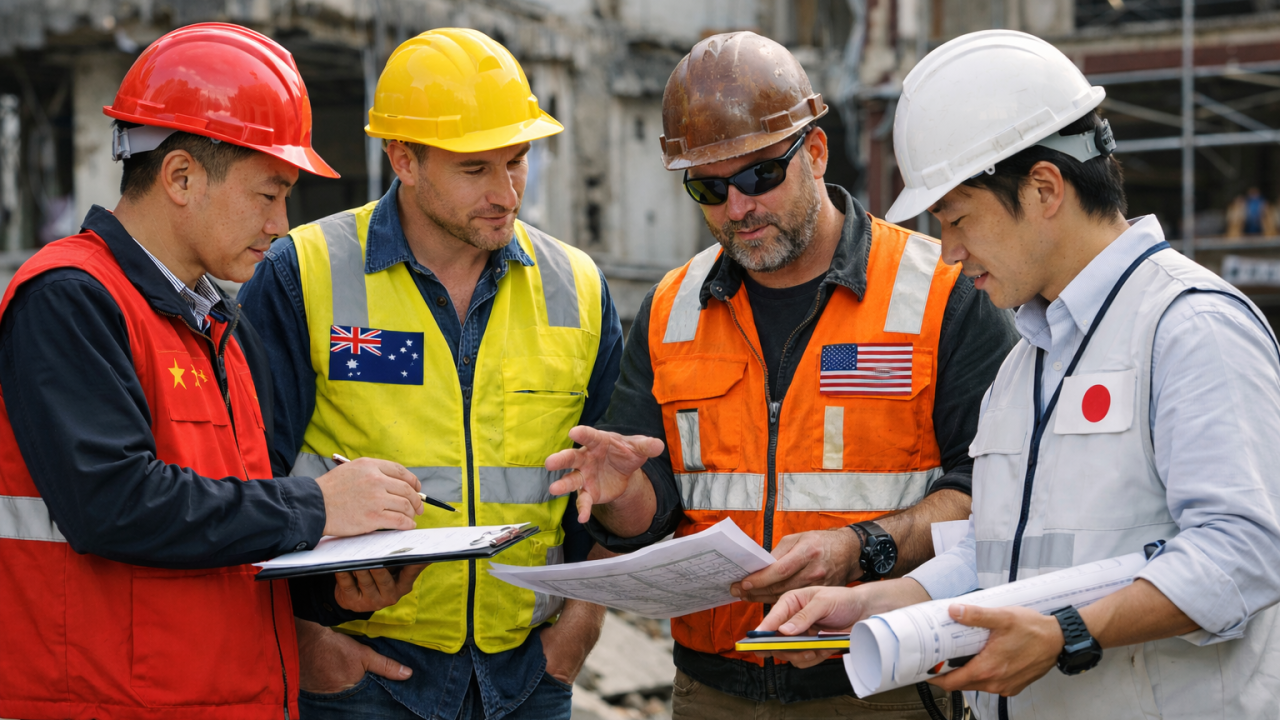
A forensic engineer’s perspective
As a forensic engineer, I deal with defective and distressed buildings on an almost daily basis. Developers, owners' corporations, property managers and strata managers often ask me very direct questions:
- Is my building actually unsafe?
- Do we really need strengthening?
- Why demolition instead of repair?
- What is your technical basis for this conclusion?
Sometimes, they even challenge the assessment itself: Why do you think this is necessary? On what standard? According to which code?
These are all fair questions. But in Australia, answering them is far from straightforward.
The uncomfortable truth: Australia has no formal assessment framework
Unlike what many people assume, Australia’s NCC and Australian Standards contain almost no structured guidance on:
- condition assessment of existing buildings
- safety grading of distressed structures
- mandatory strengthening triggers
- decision thresholds between repair, strengthening and demolition
As a result, forensic and remedial engineering in Australia is largely judgment-based, not rule-based.
That places a significant burden on individual engineers.
How other countries handle the same problem
Having worked with international references and projects, the contrast is striking.
China operates a national building safety classification system (commonly A–D), where each grade links directly to prescribed actions. Assessment outcomes are quantifiable, and decisions are system-driven.
Japan takes a performance-based approach, particularly for seismic safety. Buildings are assessed against measurable indices, and strengthening decisions are tied to defined performance targets.
The United States sits somewhere in between. While there is still no single mandatory national framework, engineers rely heavily on FEMA and ASCE technical guidelines, which—although not legally binding—provide a shared technical language and decision-making baseline.
Australia, by comparison, offers almost none of this structure.
Flexibility comes at a cost
Some argue that Australia’s approach provides flexibility. That is true—but flexibility comes with responsibility.
Without prescribed assessment grades or mandatory thresholds, the entire decision chain rests on professional judgment:
- defining the problem
- interpreting risk
- justifying the scope of works
- defending the recommendation legally and technically
In practice, this means the engineer must be able to stand behind the decision, not hide behind a clause number.
Why this matters to clients
For clients, this also explains why two engineers may reach different conclusions on the same building—and why experience matters.
In Australia, forensic engineering is not about ticking boxes. It is about evidence, reasoning, proportionality and accountability.
That is uncomfortable—but it is also where the profession’s true value lies.
Final thought
The absence of prescriptive standards does not reduce risk. It simply concentrates it.
In Australia, assessing and rectifying defective buildings requires not just technical knowledge, but judgment that can withstand scrutiny—commercial, regulatory and legal.
And that, ultimately, is what clients are really asking for.

#ForensicEngineering
#RemedialEngineering
#BuildingDefects
#StructuralAssessment
#BuildingDiagnostics
#AustraliaConstruction
#InternationalEngineering
#GlobalStandards
#CodeAndStandards
#CharteredEngineer
#ProfessionalEngineer
#Superintendent
#ConstructionManagement
#ApartmentBuildings
#Strata
#RiskManagement
#EngineeringJudgement