
ArticleEngineering & construction
The Importance of Construction Project Acceptance: Addressing Deficiencies in Australia's NCC and AS Systems and Recommendations for Improvement
1. Introduction: The Importance of Construction Project Acceptance
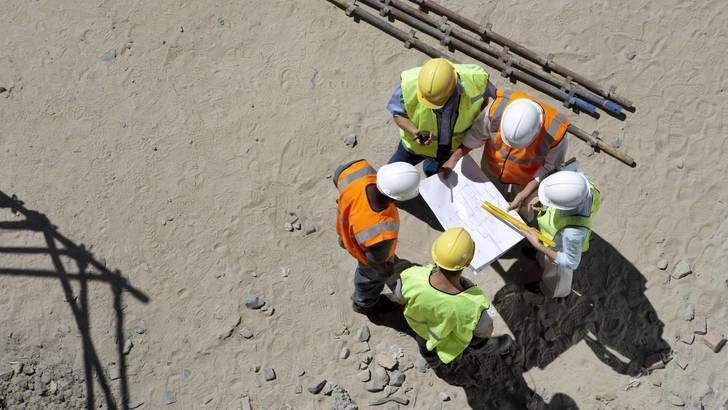
Construction project acceptance is a critical step in ensuring that buildings meet safety, performance, and functional standards.
- For new projects: A systematic acceptance process helps identify construction issues, ensuring safety and preventing hidden defects.
- For existing buildings: A comprehensive assessment determines structural reliability, safety risks, and appropriate strengthening or repair measures.
However, Australia's current NCC (National Construction Code) and related AS (Australian Standards) exhibit significant shortcomings, particularly regarding standardized acceptance procedures and existing building assessments. Compared to systems in China, the United States, and the United Kingdom, Australia lags behind in detailed regulations and operational consistency.
2. Deficiencies in Australia’s NCC and AS Systems
2.1. Lack of Unified Construction Quality Acceptance Standards
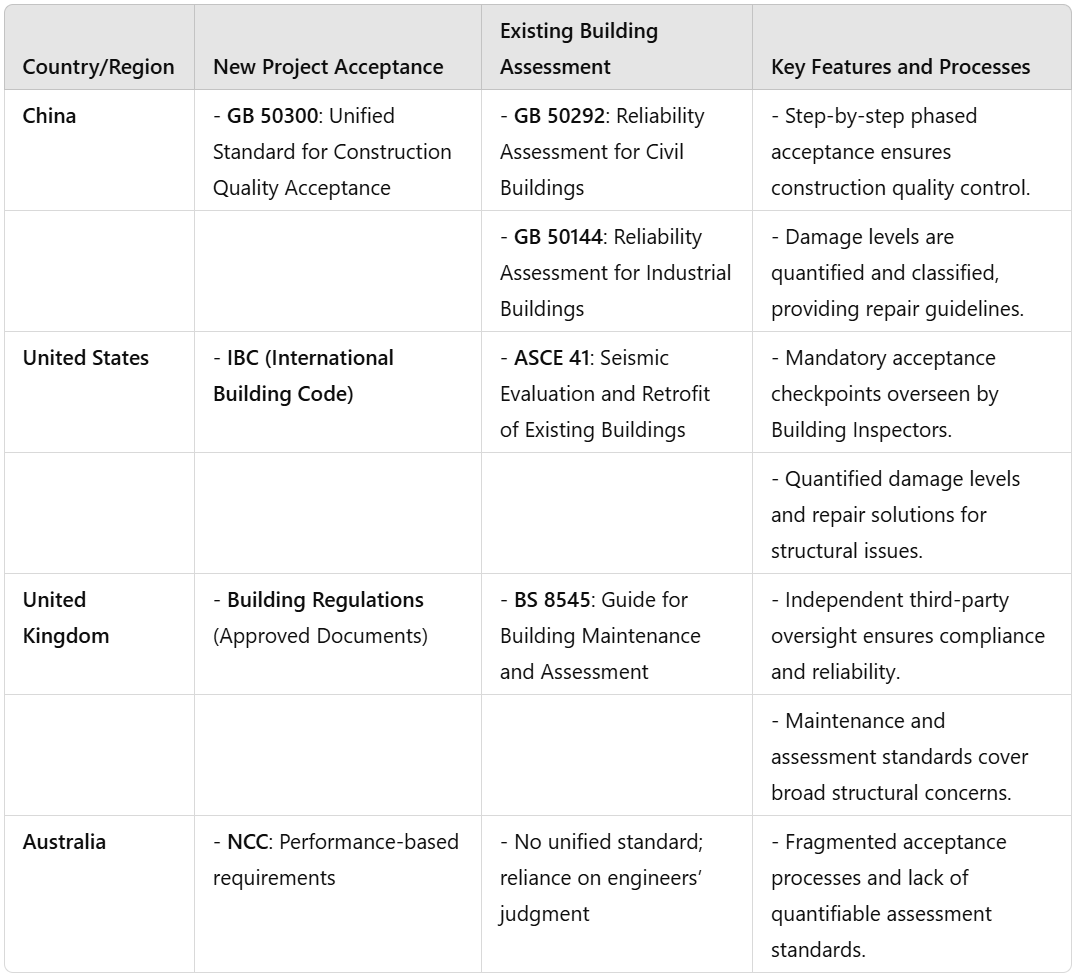
The NCC primarily focuses on performance-based requirements for buildings but lacks detailed, step-by-step acceptance standards for construction phases.
Existing AS standards (e.g., AS 3600 for concrete structures, AS 4100 for steel structures) focus more on structural design and materials rather than procedural quality acceptance.
2.2 Fragmented Acceptance Procedures
The acceptance process relies on local government, private certifiers, or engineers’ judgment. Variability between regions leads to inconsistent standards and disputes.
2.3. Absence of Existing Building Assessment Standards
Australia has no unified standards for assessing the safety and reliability of existing buildings. Engineers primarily rely on personal experience rather than quantifiable guidelines.
This gap complicates fault identification, responsibility allocation, and repair decisions in cases of structural issues.
3. Notable Construction Failures in Australia
Sydney Region
- Opal Tower Incident (2018): Structural cracks led to mass evacuations, exposing flaws in quality control and acceptance processes.
- Mascot Towers (2019): Ground settlement and structural damage revealed major shortcomings in evaluating existing buildings.
- North Ryde Apartment Cracks: Structural instability emerged post-construction, highlighting inadequate acceptance oversight.
Melbourne Region
- Spencer Street Basement Leakage: Poor acceptance and construction oversight caused severe water leakage, damaging structural components.
- La Trobe Street Façade Cracks: Repeated façade failures led to disputes between owners and developers, stemming from loose acceptance controls.
These incidents demonstrate the urgent need for robust and standardized construction acceptance procedures and existing building assessment frameworks.
4. International Comparison: Construction Acceptance and Assessment Systems
5. China’s Detailed Standards for Building Assessment and Strengthening
5.1. Standards for Different Building Types
Civil Buildings: GB 50292 – Reliability assessment with quantified damage classification (A, B, C, D).
Industrial Buildings: GB 50144 – Specialized standards for assessing dynamic loads and unique operational conditions.
5.2. Standards for Different Structural Systems
Concrete Structures: GB 51235 – Technical guidelines for repair and strengthening.
Masonry Structures: GB/T 50369 – Strengthening guidelines for brick and stone structures.
Steel Structures: GB 51285 – Evaluation and strengthening standards for steel buildings.
5.3. Seismic Strengthening Standards
GB 50367: Specifies strengthening methods, such as carbon fiber reinforcement, steel plate bonding, and concrete section enhancement, with strict quality acceptance guidelines.
Key Features:
Systematic and targeted standards ensure scientific evaluations and effective strengthening solutions for both civil and industrial buildings.
Quantified criteria (e.g., crack width, deformation thresholds) minimize subjective interpretation.

6. Recommendations to Improve Australia’s Construction Acceptance and Assessment Systems
6.1 Develop a Unified Construction Quality Acceptance Standard
6.2 Create a Quantified Standard for Existing Building Assessment
6.3 Strengthen Independent Third-Party Oversight
6.4 Adopt Digital Technologies for Quality Monitoring
6.5 Enforce Legal Responsibility and Insurance Mechanisms
7. Conclusion
Australia’s current NCC and AS systems exhibit significant deficiencies in both new construction acceptance and existing building assessment. The lack of standardized, quantifiable procedures has contributed to repeated construction failures and disputes. By drawing on the comprehensive systems of China, the United States, and the United Kingdom, Australia must prioritize the development of unified acceptance standards, quantified assessment guidelines, and independent oversight mechanisms.
Only through these improvements can Australia safeguard construction quality, ensure public safety, and promote the sustainable development of the building industry.
