
ArticleEngineering & construction
Do You Really Understand Reactive Clay? A Widely Abused Yet Deeply Misunderstood Geotechnical Issue in Australia's Construction Industry
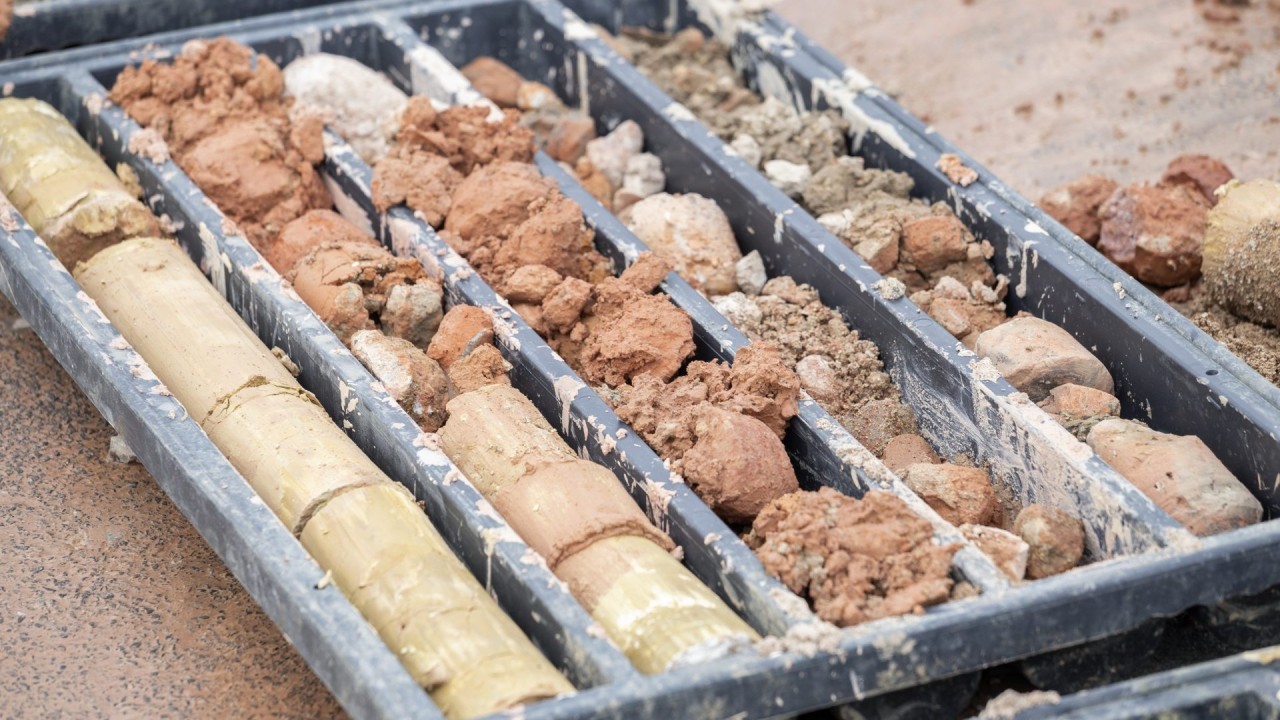
In Australian engineering circles, few terms are thrown around as casually—or as carelessly—as "reactive clay." For many structural engineers, builders, and project managers, it's become the all-purpose scapegoat for everything from cracked walls and sticking doors to sinking footings. But here's the uncomfortable truth: reactive clay is not the villain it's made out to be. Rather, it is one of the most misunderstood—and misused—concepts in our field.

Understanding the Material Itself
Reactive clay soils occur worldwide, including Australia, the UK, the United States, China and other regions. Their consequences depend on the soil profile, moisture regime and building, not nationality. Lightly loaded structures can be particularly vulnerable to differential heave, while heavier buildings and buried structures are not automatically immune.
In Australia, the combination of reactive ground, shallow residential footings, trees, drainage changes and variable weather makes this a practical design issue. The question is how those conditions interact at the particular site, rather than whether the words “reactive clay” appear in a report.
The mineral composition matters. Smectites, including montmorillonite, can have high swelling potential; kaolinite generally has much less interlayer swelling, while illite and mixed-layer minerals behave differently. Exchangeable cations also matter: sodium and calcium montmorillonite do not exhibit identical swelling behaviour. A mineral name alone does not establish a design movement or pressure.

The layered structure of montmorillonite allows changes in interlayer hydration. This contributes to swelling and shrinkage, alongside interactions between particles and pore water. Actual soil behaviour also depends on clay content, density, fabric, stress history, suction and pore-water chemistry. Laboratory results must therefore be interpreted for the tested material and conditions; they are not universal properties of every soil described as clay.
The damage associated with reactive ground is real, but identifying a hazard is only the beginning of diagnosis. We need to distinguish seasonal shrink–swell movement from fill settlement, erosion, leaking services and structural defects. Avoidable damage may reflect inadequate investigation, design, construction or maintenance, or a combination. Calling every crack a consequence of reactive clay avoids that investigation.

The Real Problem: Structural Damage Caused by Swelling and Shrinkage of Reactive Clay
Reactive clay can shrink as it dries and swell as it wets. Uneven movement beneath a building can cause slab curvature, footing rotation, cracked masonry and distorted openings. The consequences depend on the magnitude and distribution of movement, the footing and superstructure stiffness, loading and the ability of joints and connections to accommodate deformation. Ground movement is not the same quantity as movement of the supported building.
Moisture changes may arise from weather, trees, leaking pipes, altered drainage or development around the property. Different parts of a site can respond at different rates and depths. A single crack inspection or moisture reading may therefore be insufficient to establish the movement history.
What the Pressure Data Actually Shows
Freeman and Lyons (2017) tested four samples of basaltic clay from north-west Melbourne under constant-volume laboratory conditions. Their reported equilibrium swell pressures were:
- 63–119 kPa at the sampled initial moisture contents of approximately 41–48%;
- 315–673 kPa after air drying to approximately 17–27% and subsequent rewetting.
These are results for specific samples and test conditions, not a pressure range to assign to every Melbourne site. The study also showed pressure reducing as expansion was allowed. Soil state, confinement and permitted strain matter. The original paper is linked below so that its methods and limitations can be checked.
AS 2870 Appendix C concerns damage classification; it is not a table prescribing swelling pressures of 50–150 kPa. The previously quoted CSIRO/Coffey and NCHRP ranges have been removed because the underlying test reports and conditions were not identified.
“Confined” means mechanically restrained against expansion. It does not mean air-tight or water-tight. Soil beneath a footing may be restrained by the building and surrounding ground while still taking up water. A ventilated subfloor does not, by itself, remove that restraint or prevent heave.
The earlier comparison with a supposed routine JOG pressure range was also inappropriate. Pump pressure, pressure transmitted to the ground, the effective area of loading and structural resistance are different matters. Controlled grouting and natural swelling have different mechanisms; comparing two headline pressure numbers cannot establish whether the clay can lift a building.
Can Rewetting Lift a Building?
Yes. Reactive soil can heave and lift foundations where the soil–structure interaction permits it. Greater building weight may suppress some movement, but it does not establish immunity. A decision requires the loading, contact conditions, soil profile, moisture change and likely deformation to be assessed together.
That does not make rewetting a reliable repair technique. Some shrinkage-related movement can reverse, yet different supports may recover by different amounts or at different times. Cracked masonry, damaged connections, altered load paths and settlement from other mechanisms can remain even if levels improve. Ground recovery and structural repair must be evaluated separately.
It is also too broad to say that drying always irreversibly destroys the soil's structure or bearing capacity. Reversible shrink–swell behaviour, hysteresis and irreversible changes can coexist. Equally, a bent steel beam is not a useful blanket analogy: elastic deflection can recover on unloading, while plastic deformation does not.
- There is no universal settlement threshold of 20 mm or 30–50 mm that determines whether heave can occur;
- There is no general rule that a heavy building prevents swelling-related movement or damaging actions on foundation elements;
- Monitoring may be appropriate in an assessed case, but passive waiting should not replace investigation or necessary repairs.
My concern remains the same: recognising reactive clay is not enough. We must establish the likely movement mechanism and whether the building can tolerate it. Neither “the soil will fix itself” nor “clay cannot lift this building” is an adequate engineering conclusion without evidence.

The Real Solutions: Investigate, Design and Verify
So, what should be done when building on reactive clay?
1. Bypass or isolate the moving ground where justified. Bored piers or piles can transfer loads to a suitable deeper stratum, but “a house has piles” is not a complete answer. The design must consider the depth of moisture influence, shaft uplift or drag from moving soil, anchorage and pile capacity, and the interaction with caps, beams and slabs. A shallow pile or a ground-contact beam can still be affected. Isolation or allowance for ground heave may be necessary; the presence of piles alone does not prove effective isolation.
2. Improve the ground using a validated method. Lime or cement treatment and resin injection are different processes with different applications. Their suitability depends on material compatibility, treatment depth and extent, construction control and verified performance. Resin injection can improve support or achieve controlled correction in suitable circumstances, but should not be assumed to remove clay reactivity or form a complete moisture barrier. Buzzi, Fityus and Sloan (2010) found that the polyurethane treatment they studied could delay, but did not prevent, rehydration.
3. Design to accommodate assessed movement where that is appropriate. A suitably designed shallow footing system can be a legitimate solution on reactive soil. The design needs a defensible movement model, compatible structural detailing and drainage measures. On some sites, a deeper or isolated system will offer a better outcome. The choice should follow the evidence, consequences of movement and whole-of-life performance, rather than a blanket preference for either shallow slabs or piles.
Before selecting any of these approaches, establish the soil profile, fill history, moisture regime, expected movement and structural demands. Explain the assumptions, how they will be verified during construction, and what maintenance is reasonably required. A repair proposal should also distinguish immediate level correction from the measures intended to manage future movement.

The Role of AS 2870—and Where Practice Must Improve
Australia’s AS 2870:2011, Residential slabs and footings, provides both standard designs and engineering design procedures. Its Section 3 standard designs exclude Class E and Class P sites. Those exclusions matter: a convenient standard detail is not automatically suitable for a problem site.
Instead of portraying the standard as permitting any slab on any clay, we should ask whether the designer has established that the selected approach fits the actual site. Site classification, bearing support, fill conditions and the building arrangement need to be connected to the design. Where the assumptions do not fit, a project-specific engineering response is required.
AS 2870 allows shallow foundations on reactive ground in appropriate circumstances. That is not inherently an engineering failure. The harder question is whether the resulting design adequately addresses the plausible movement scenarios, the sensitivity of the building and the consequences for owners. A compliant drawing is only part of the evidence; the work must also be constructed and maintained consistently with its assumptions.
Where I believe improvement is needed is the strength of the evidence connecting investigation, design and construction. For difficult sites, I want a clear explanation of why the foundation system was selected, what could cause its assumptions to become invalid, and how those risks have been managed. A soil-class label and a standard drawing should not become substitutes for that explanation.
Governments and industry should also examine the whole-of-life cost. Saving on investigation or foundation construction can be a false economy if owners later face major repairs. That is a case for transparent performance evidence and accountability. It is not evidence that any particular committee member or organisation deliberately traded away engineering responsibility; the earlier assertions about motives were not substantiated.
The standard's development and application should be informed by documented failures, field monitoring and independent research. I support stronger verification for high-risk sites, clearer allocation of responsibilities and a practical link between design assumptions and construction hold points. Reform should identify which requirements are missing or inadequate, and which existing requirements are simply not being applied.

A Call for Structural Reform
We have to be precise about the failures we use to argue for reform. Similar cracks can arise from different mechanisms, and a damaged building is not proof that reactive clay was the sole cause. Jordan Springs East, for example, raises documented concerns about fill and its verification; it should not be presented as a proven shrink–swell case or a demonstration of fully compliant design failing.
Let’s stop treating reactive clay as either an unknowable mystery or a universal explanation. It is a geotechnical hazard that can be investigated and designed for, with uncertainty made explicit. Shallow foundations on reactive ground are not automatically negligent. The professional failure is proceeding without adequately understanding and addressing the conditions and risks that matter to the particular project.
AS 2870 and the system around it should continue to improve. My call is for better investigation, clearer engineering justification, construction verification and accountability for performance. Where the evidence favours piles, isolation or ground treatment, those options should be seriously evaluated. Where a shallow system is justified, its assumptions and limitations should be demonstrated. Owners deserve that evidence, not a reassuring soil-class label followed by an expensive explanation after damage appears.

Author: Scott Chen
North Star Design & Build
CPEng, MIEAust, NER | Licensed Builder | PMP | MCIOB | MAIPM
#reactiveclay #soilmovement #geotechnicalhazard #AS2870 #residentialengineering #structuralfailure #engineeringethics
Technical References and Revision Note
Updated 5 October 2026. This revision corrects the pressure references, confinement explanation, claims about irreversible shrinkage and building uplift, and the treatment of shallow foundations and AS 2870. The call for stronger investigation and verification is retained.
- Freeman and Lyons (2017), Confined and partially confined swelling pressure of basaltic clays, AGS Victoria Symposium.
- USGS, Environmental Characteristics of Clays and Clay Mineral Deposits; and The relation between composition and swelling in clays.
- Standards Australia, AS 2870:2011, Residential slabs and footings—Sections 2–4 and Appendix C.
- Buzzi, Fityus and Sloan (2010), Use of expanding polyurethane resin to remediate expansive soil foundations, Canadian Geotechnical Journal 47, 623–634.
- Penrith City Council, Jordan Springs East—Council's published account of fill verification and planning notations.