
ArticleEngineering & construction
Comprehensive Overview of Deep Excavation Shoring Systems in Australia: Mainstream Systems and Reinforcement Techniques
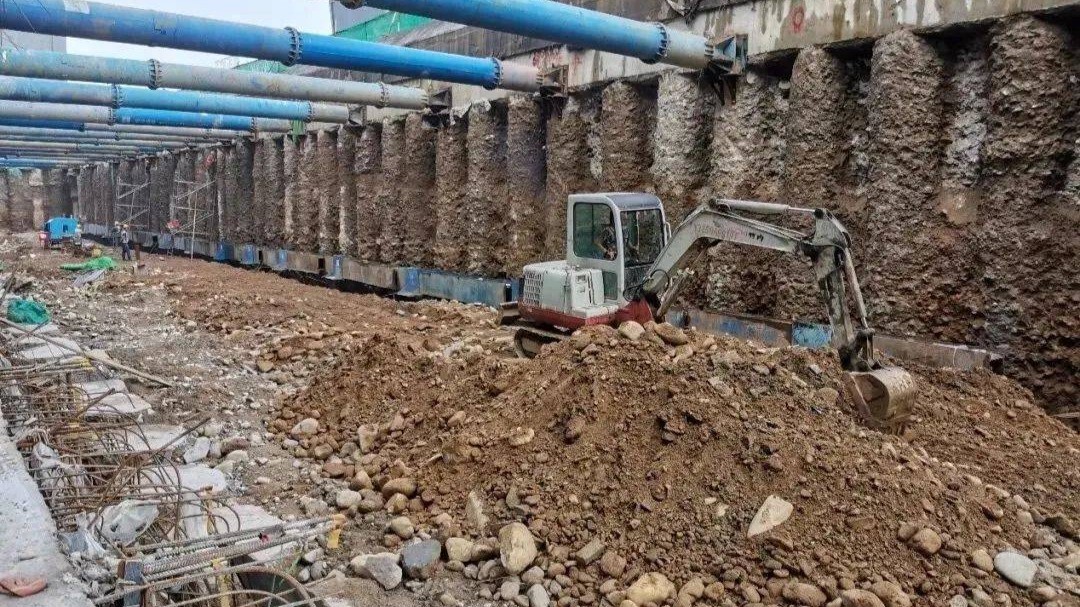
In the Australian deep excavation field, selecting the appropriate shoring system is crucial to ensure safety, stability, and cost efficiency. Based on industry practice, deep excavation shoring systems can be classified into three main types, with supplementary reinforcement techniques to enhance stability:
- Diaphragm Walls
- Pile Wall Systems
- Sheet Piles
To further enhance structural stability and safety, the following reinforcement techniques are commonly employed:
- Horizontal Strutting
- Soil Nailing
- Ground Anchors
Below is a detailed breakdown of each system and its recommended combinations to help engineers, contractors, and developers make informed decisions when planning shoring solutions.
1. Diaphragm Wall Systems
✅ Definition
Diaphragm walls are continuous concrete walls constructed using specialized trenching equipment. They provide excellent stiffness, stability, and waterproofing performance. Diaphragm walls are ideal for deep excavations, high water table areas, adjacent buildings, and projects requiring long-term durability.
🔍 Types of Diaphragm Walls
- Conventional Diaphragm Wall Characteristics: Provides the greatest stiffness and water resistance; ideal for deep basements and permanent structures. Suitable for: Metro stations, tunnel entrances, underground car parks, and major deep excavation projects.
- CSM Wall (Cutter Soil Mixing Wall) Characteristics: Eco-friendly with reduced spoil; strong water resistance. Suitable for: High water table areas, pollution control walls, and sewage treatment facilities.
- SMW Wall (Soil Mixing Wall) Characteristics: Fast installation and cost-effective; ideal for shallow excavations. Suitable for: Contamination control walls and groundwater cut-off barriers.
- Barrettes Wall Characteristics: High stiffness and stability, ideal for handling large lateral loads. Suitable for: High-rise building foundations, deep basements, and areas with significant lateral pressure.
- H-Beam Composite Wall Characteristics: This system consists of vertically installed H-shaped steel beams combined with infill panels made of concrete, shotcrete, or even timber boards. It significantly enhances the wall’s lateral stiffness and overall stability, especially in confined construction sites or areas with limited access. The system is versatile—it can serve as either temporary shoring for deep excavations or a permanent retaining wall solution, depending on design requirements. Common applications include underground car parks, metro station boxes, deep utility trenches, and urban basement construction projects.


2. Pile Wall Systems
✅ Definition
Pile wall systems involve drilling and casting concrete piles with reinforcement cages. They are suitable for medium-depth excavations, soft soil conditions, and complex surroundings.
🔍 Types of Pile Walls
- Secant Piles Characteristics: Best waterproofing performance; high stiffness; can serve as permanent walls. Suitable for: High water table conditions requiring strong water resistance.
- Tangent Piles Characteristics: Moderate waterproofing performance; requires less precise positioning. Suitable for: Medium-depth excavations and low water table environments.
- Contiguous Piles Characteristics: Cost-effective and simple installation; ideal for shallow excavations. Suitable for: Small underground car parks, driveway protection, and residential projects.


3. Sheet Piles
✅ Definition
Sheet piles are driven, vibrated, or pressed into the ground to form retaining walls and cofferdams. They are valued for quick installation, reusability, and effective water resistance.
🔍 Types of Sheet Piles
- U-shaped Sheet Piles Characteristics: Strong water resistance and stiffness; suitable for temporary or permanent works. Suitable for: Riverbanks, coastal protection, and high water table projects.
- Z-shaped Sheet Piles Characteristics: High moment of inertia; suitable for projects requiring superior stiffness. Suitable for: Deep excavations, underground car parks, and coastal protection.
- Flat Web Sheet Piles Characteristics: Often used as supplementary piles or combined with other systems. Suitable for: Temporary enclosures or confined space excavation.


4. Reinforcement Techniques and Combination Applications
✅ Definition
Reinforcement techniques are typically employed alongside primary shoring systems to enhance stability, mitigate movement, and improve structural performance.
🔍 Recommended Combinations
- Diaphragm/Pile Walls/Sheet Piles + Horizontal Strutting Suitable for: Nearly all scenarios requiring exceptional structural stability and rigidity, while also offering adaptability for integration into permanent structures upon completion of the shoring process.
- Diaphragm Wall + Ground Anchors Suitable for: Deep excavations, adjacent buildings, and high lateral pressure. Advantage: Diaphragm wall acts as the primary support structure; ground anchors provide additional stability.
- Pile Walls + Shotcrete + Soil Nailing Suitable for: Medium-depth excavations and challenging ground conditions. Advantage: Shotcrete forms a continuous surface, while soil nails enhance sliding resistance.
- Sheet Piles + Soil Nailing Suitable for: Shallow or temporary excavations requiring fast construction. Advantage: Sheet piles form the main barrier, with soil nails reinforcing stability.
- CSM Wall + Ground Anchors Suitable for: Contamination control walls and high water table areas. Advantage: CSM walls ensure waterproofing, while anchors increase structural strength.


5. Conclusion
✅ Diaphragm Walls, Pile Wall Systems, and Sheet Piles are the primary shoring systems in deep excavation projects. ✅ Reinforcement techniques (such as Horizontal Strutting, Soil Nailing, Ground Anchors, and Shotcrete) are valuable supplements that enhance stability in challenging conditions. ✅ The optimal combination depends on geological conditions, water table levels, excavation depth, and project environment.
👉 When selecting shoring solutions, always consider project-specific requirements to ensure safety, cost-efficiency, and long-term stability.
#Engineering #DeepExcavation #ShoringSystems #ConstructionDesign #StructuralStability #SoilNailing #GroundAnchors #SheetPiles #CivilEngineering #AustraliaEngineering